

“I can’t fall asleep at night.” “I keep waking up in the middle of the night.” “I wake up too early in the morning.” “I never feel rested even after sleeping.” — If these experiences happen several days a week and are affecting your daytime functioning, they may be signs of insomnia.
Sleep problems are extremely common among people in Japan. According to a survey by Japan’s Ministry of Health, Labour and Welfare, approximately 20% of adults experience some form of sleep difficulty. With appropriate treatment and lifestyle adjustments, many people can improve their sleep.
Keldsen Family Clinic is a family-oriented clinic offering both Psychosomatic Medicine and Internal Medicine, a 1-minute walk from ‘Oizumi Yubinkyoku’ bus stop, accessible by Seibu Bus from Oizumi-Gakuen Station. We are open on weekends and holidays and also offer telemedicine. “Going to a clinic feels a little scary” — we’d love to help you take that first step.
About Sleep Disorders

Sleep disorders are a general term for various conditions that affect sleep. Common examples include insomnia, sleep apnea syndrome, restless legs syndrome, and narcolepsy (excessive daytime sleepiness).
Sleep is an essential time for the recovery of both mind and body. Chronic insomnia is known to be linked not only to reduced daytime performance but also to an increased risk of depression, anxiety disorders, and lifestyle-related diseases. Rather than dismissing it as “just a lack of sleep,” seeking early care is important.
Behind insomnia, various factors can be intertwined — including stress, disrupted daily routines, physical illnesses, medications currently being taken, and other mental health conditions such as depression and anxiety disorders.
In recent years, environments that tend to disrupt sleep patterns — such as smartphones, social media, night shifts, and rotating shift work — have become increasingly common. Chronic sleep deprivation can lead to decreased concentration and impaired judgment, while also affecting immune function, blood sugar levels, and blood pressure regulation, thereby increasing the risk of lifestyle-related diseases.
At Keldsen Family Clinic, we carefully assess each case, including any connections to physical health conditions.
What Is Insomnia?
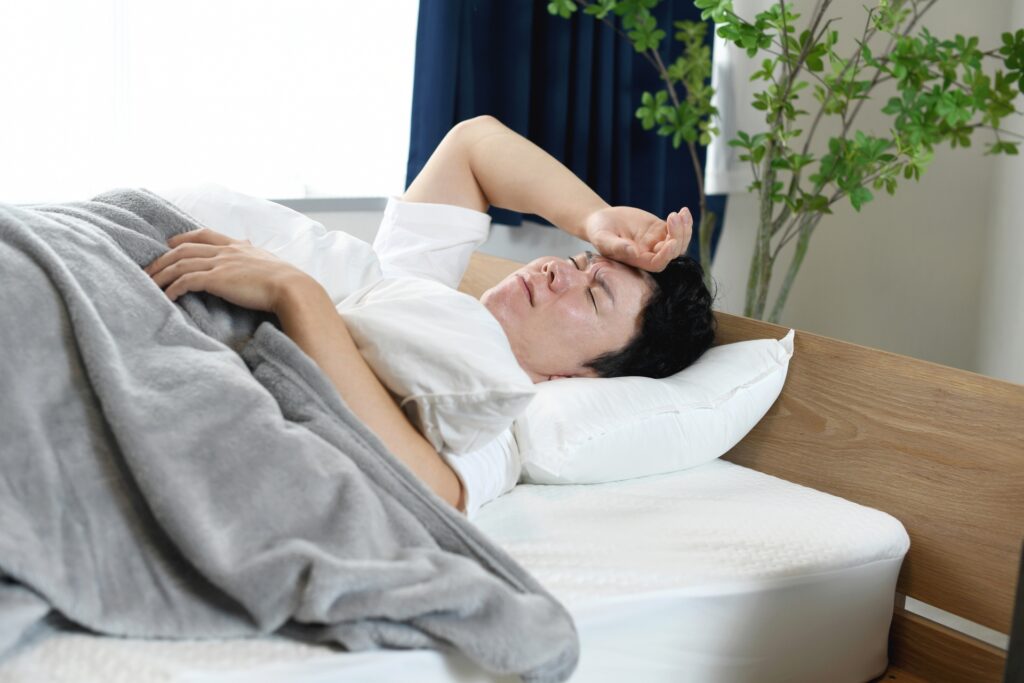
Insomnia is a condition in which sleep problems occur several days a week for a month or more, leading to daytime symptoms such as fatigue, decreased motivation, difficulty concentrating, and loss of appetite. Simply having an occasional sleepless night does not constitute insomnia — the key diagnostic criterion is that the inability to sleep is causing impairment in daily life.
Insomnia can be categorized into four types based on which aspect of sleep is affected:
- Sleep-onset insomnia: Taking 30 minutes to an hour or more to fall asleep
- Sleep-maintenance insomnia: Waking up multiple times during the night with shallow sleep
- Early-morning awakening: Waking up more than 30 minutes earlier than intended and being unable to fall back asleep
- Non-restorative sleep: Sleeping for a sufficient duration but still feeling unrefreshed and unrested
These types may occur individually or in combination.
Behind insomnia, there may be not only stress and lifestyle disruptions but also underlying mental health conditions such as depression and anxiety disorders, or physical conditions such as sleep apnea syndrome. Identifying the root cause is essential for determining an effective treatment plan.
Occasional sleeplessness can happen to anyone, but when it occurs three or more times per week for three months or longer, it may be classified as “chronic insomnia” and become a target for treatment. The anxiety about “not being able to sleep” itself often perpetuates the cycle of sleeplessness, so early consultation is important.
At Keldsen Family Clinic, we leverage our combined Psychosomatic Medicine and Internal Medicine practice to carefully assess causes from both the physical and psychological perspectives.
Symptoms and Characteristics of Insomnia
The symptoms of insomnia can manifest across three dimensions: nighttime sleep problems, daytime impairment, and effects on daily life.
Specific Symptom Examples
Nighttime Sleep Problems
- Unable to fall asleep within 30 minutes of going to bed
- Waking up multiple times during the night
- Unable to fall back asleep once awakened
- Waking up earlier than desired
- Feeling unrested despite adequate sleep duration
- Nightmares or a sense of shallow sleep
Daytime Impairment
- Persistent fatigue and tiredness
- Difficulty concentrating and memory problems
- Drowsiness and unintentional napping
- Irritability and low mood
- Headaches and dizziness
- Changes in appetite
Effects on Daily Life
- Decreased efficiency at work or in household tasks
- Increased risk of mistakes and accidents
- Reluctance to engage in social interactions
- Lack of energy to exercise
- Inability to feel refreshed even on days off
The anxiety and pressure about being unable to sleep can further worsen sleep quality — this vicious cycle is a hallmark of insomnia. Many people experience the paradox of becoming less able to sleep the more they tell themselves, “I must get to sleep.”
Treatment and Management of Insomnia
Treatment for insomnia is built on improving sleep habits and the sleep environment (sleep hygiene), combined with cognitive behavioral therapy and, when necessary, medication. Internationally, Cognitive Behavioral Therapy for Insomnia (CBT-I) is recommended as the first-line treatment.
1. Medication
When insomnia is causing significant distress or in cases of acute insomnia, the following types of sleep medications may be used:
- Benzodiazepine sleep medications: Fast-acting but carry a risk of dependence, so short-term use is standard
- Non-benzodiazepine sleep medications (Z-drugs): Tend to have relatively fewer side effects such as dizziness
- Melatonin receptor agonists (Ramelteon): Help regulate the body’s internal clock with a low risk of dependence
- Orexin receptor antagonists (Suvorexant / Lemborexant): A newer class of medication that promotes natural sleepiness with a low risk of dependence
Your physician will select the most appropriate medication based on your symptoms and lifestyle, prescribing the minimum effective dose for the shortest necessary duration. Stopping medication on your own may lead to a relapse of insomnia, so any adjustments should always be made in consultation with your doctor.
2. Psychological Support (CBT-I)
Cognitive Behavioral Therapy for Insomnia (CBT-I) is recommended as the first-line treatment in clinical guidelines worldwide. Unlike medication, it offers the significant advantage of producing benefits that can continue even after treatment ends.
Key components of CBT-I:
- Sleep restriction therapy: Reducing the time spent in bed to consolidate sleep
- Stimulus control therapy: Training the brain to associate the bed exclusively with sleep
- Cognitive restructuring: Addressing and reframing thoughts such as “What if I can’t sleep?”
- Relaxation techniques: Releasing tension through breathing exercises and progressive muscle relaxation
3. Tips for the Workplace and School
- If you work night shifts or rotating shifts, discuss prioritizing your sleep schedule with your employer
- Avoid bright lights and screens immediately after returning home
- Limit caffeinated beverages after the early afternoon
- Keep naps before 3 PM and under 20 minutes
4. Tips for the Home
- Minimize differences in bedtime schedules among family members
- Keep the bedroom as a space dedicated to sleep
- Avoid dismissing the person’s difficulty sleeping
- Create a relaxing evening routine together
5. General Self-Care (Sleep Hygiene)
These are fundamental practices also recommended in the “Sleep Guidelines for Health Promotion” issued by Japan’s Ministry of Health, Labour and Welfare.
- Fix your wake-up time: Keeping a consistent wake time is more important than a fixed bedtime
- Get morning sunlight: Effective for resetting the body’s internal clock
- Light exercise during the day: Walking, yoga, and similar activities
- Avoid smartphones, computers, and bright lights before bed
- Caffeine, alcohol, and nicotine can reduce sleep quality
- Warm bath: Bathing 1–2 hours before bedtime can help with falling asleep
- Keep the bedroom dark, quiet, and at a comfortable temperature
Insomnia is a condition that can improve with appropriate treatment and lifestyle adjustments. You don’t have to struggle with it alone — please feel free to reach out to Keldsen Family Clinic. We are a 1-minute walk from ‘Oizumi Yubinkyoku’ bus stop, accessible by Seibu Bus from Oizumi-Gakuen Station, open on weekends and holidays, and also offer telemedicine.