

“Every spring, I can’t stop sneezing and my nose keeps running.” “My eyes are so itchy it’s unbearable.” “I’m stuffed up year-round and can barely breathe.” — Hay fever and other allergic conditions can significantly reduce your quality of life. It is estimated that roughly half of all people in Japan have some form of allergy, and the number of those affected continues to grow each year.
Left untreated, allergies do not simply go away — they can impair your concentration, disrupt your sleep, and affect your performance at work or school. Fortunately, treatment options are expanding, from effective medications to sublingual immunotherapy, which targets the root cause.
Keldsen Family Clinic is a family-oriented clinic offering both Psychosomatic Medicine and Internal Medicine, a 1-minute walk from ‘Oizumi Yubinkyoku’ bus stop, accessible by Seibu Bus from Oizumi-Gakuen Station. We are open on weekends and holidays and also offer telemedicine. “Going to a clinic feels a little scary” — we’d love to help you take that first step.
About Allergic Conditions

An allergy is a state in which the immune system overreacts to substances that are normally harmless to the body. Common triggers (allergens) include pollen, house dust, dust mites, pet dander, and certain foods.
The major allergic conditions include the following:
- Hay fever (seasonal allergic rhinitis): Caused by pollen from Japanese cedar, cypress, ragweed, and other plants
- Perennial allergic rhinitis: Primarily caused by house dust and dust mites
- Allergic conjunctivitis: Occurs when pollen or other allergens irritate the mucous membranes of the eyes
- Bronchial asthma: Chronic inflammation of the airways
- Atopic dermatitis: Impaired skin barrier function combined with an immune response
- Food allergies: Specific foods trigger hives, anaphylaxis, or other reactions
These conditions can occur on their own, but it is also quite common to have multiple allergic conditions at the same time — a phenomenon sometimes referred to as the “allergic march.”
A survey by the Tokyo Metropolitan Government found that the estimated prevalence of Japanese cedar hay fever among Tokyo residents is roughly 50%. Rather than assuming “it’s normal to have symptoms,” it is important to recognize that allergies are a treatable condition that can be managed effectively.
What Are Hay Fever and Allergic Rhinitis?
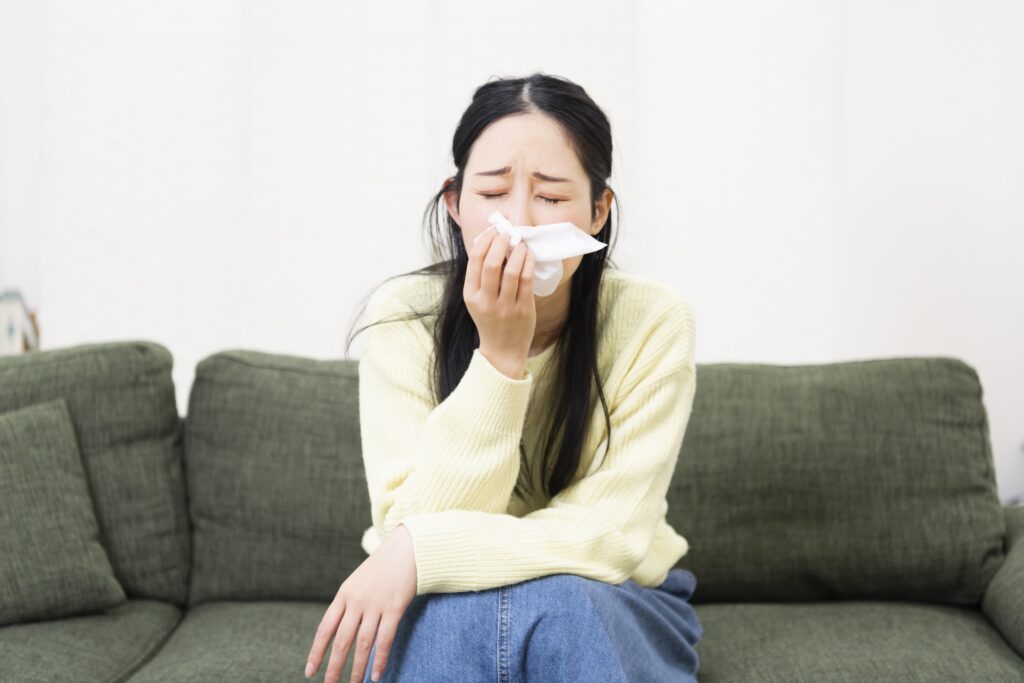
Hay fever is a seasonal form of allergic rhinitis caused by plant pollen. In Japan, Japanese cedar pollen is the most common trigger, followed by cypress, grasses, and ragweed. Symptoms flare up primarily during the pollen season.
Perennial allergic rhinitis is caused by allergens such as house dust, dust mites, mold, and pet dander, and symptoms persist throughout the year.
How Symptoms Develop
When an allergen lands on the mucous membranes of the nose or eyes, immune cells respond by releasing histamine and other chemical mediators. These substances trigger sneezing, a runny nose, itching, and other symptoms.
Conditions That Often Occur Together
- Allergic conjunctivitis: Itchy eyes, redness, and tearing
- Bronchial asthma: Coughing and shortness of breath
- Atopic dermatitis: Skin itching
- Oral allergy syndrome: Discomfort in the mouth after eating certain fruits or vegetables
At Keldsen Family Clinic, we identify the cause and severity of your allergy and recommend a treatment plan based on how it affects your daily life.
Symptoms of Hay Fever and Allergic Conditions
Allergy symptoms typically appear relatively quickly — within minutes to hours — after exposure to an allergen.
Common Symptoms
Nasal Symptoms
- Repeated bouts of sneezing
- Clear, watery nasal discharge
- Nasal congestion
- Itching inside the nose
- Reduced sense of smell
- Postnasal drip (mucus dripping down the back of the throat)
Eye Symptoms
- Itchy eyes
- Redness
- Excessive tearing
- A gritty or foreign-body sensation in the eyes
- Swollen eyelids
Systemic Symptoms
- Fatigue and difficulty concentrating
- Poor sleep quality
- Itchy or irritated throat
- Skin itching
- Coughing or worsening asthma
Warning Signs That Require Immediate Medical Attention
- Severe difficulty breathing or wheezing
- Feeling faint or disoriented
- Widespread hives
- Swelling of the lips or throat
- Drop in blood pressure (anaphylaxis — seek emergency care immediately)
Treatment and Management of Hay Fever and Allergic Conditions
The cornerstones of treatment are allergen avoidance, medication, and — when appropriate — immunotherapy. The combination of treatments is determined by the severity of your symptoms and how much they affect your daily life.
1. Medications (Symptom Relief)
Medications help control symptoms. For hay fever, starting treatment before symptoms appear (early intervention therapy) can reduce symptom severity throughout the season.
- Second-generation antihistamines (oral): Effective for sneezing, runny nose, and itching. Newer options are less likely to cause drowsiness (e.g., fexofenadine, loratadine, bilastine)
- Leukotriene receptor antagonists: Helpful for nasal congestion and when asthma is also present
- Intranasal corticosteroid sprays: The most effective option for nasal congestion, with minimal systemic side effects
- Eye drops: For itchy, red eyes (antihistamine or corticosteroid eye drops)
- Nasal decongestant sprays: For stubborn congestion on a short-term basis
- Kampo (traditional herbal) medicine: May be used as a complement depending on individual constitution
Starting oral medication about two weeks before symptoms typically begin tends to improve effectiveness.
2. Sublingual Immunotherapy (Targeting the Root Cause)
Sublingual immunotherapy (SLIT) involves taking small amounts of an allergen regularly over time to gradually change the body’s immune response.
- Target conditions: Japanese cedar hay fever and dust mite allergic rhinitis
- Method: A tablet is placed under the tongue once daily
- Duration: Three to five years of continuous treatment is recommended
- Expected outcome: Many patients may experience a meaningful reduction in symptoms, and in some cases, long-term remission may be achieved
For cedar hay fever, treatment is typically started between June and November, when cedar pollen is not in the air. The first dose must be administered at a medical facility, after which treatment can be continued at home.
Keldsen Family Clinic offers consultations on sublingual immunotherapy.
3. Allergen Avoidance and Environmental Adjustments
- Hay fever: Wear a mask, glasses, and a hat; check pollen forecasts; brush off clothing before entering the house; wash your face and rinse your nasal passages; avoid drying laundry outdoors
- House dust and dust mites: Vacuum at least once a week; wash bedding regularly and dry it in sunlight; keep indoor humidity around 50%
- Pet allergies: Keep pets out of the bedroom; bathe them regularly
- Food allergies: Avoid known trigger foods; always check food labels
4. Preparing for Anaphylaxis
For individuals with a history of severe anaphylaxis from food or insect stings, carrying an EpiPen (adrenaline auto-injector) may be recommended. It is also important to inform your school or workplace and share an action plan with those around you.
5. Everyday Self-Care
- Sleep: Adequate sleep helps maintain a balanced immune system
- Diet: Eat a balanced diet; fermented foods may support gut health
- Moderate exercise: Helps regulate immune function
- Stress management: Stress can worsen allergy symptoms
- Avoid smoking: Both active and passive smoking can aggravate respiratory allergies
- Seek care early: Visit your doctor before the season starts or as soon as symptoms appear
Hay fever and allergic conditions are highly manageable with appropriate treatment. If you struggle with symptoms every year or are interested in sublingual immunotherapy, please feel free to reach out to Keldsen Family Clinic. We are a 1-minute walk from ‘Oizumi Yubinkyoku’ bus stop, accessible by Seibu Bus from Oizumi-Gakuen Station, open on weekends and holidays, and offer telemedicine appointments.