

“My cough won’t stop at night.” “I get short of breath when I run.” “I hear a wheezing or whistling sound when I breathe.” — If symptoms like these persist, you may have bronchial asthma. Asthma is caused by chronic inflammation of the airways, and with proper ongoing treatment, it is a condition that can be well controlled.
It is not uncommon for people to be told they have asthma for the first time as an adult. Fear of attacks may lead you to stay home, or you may wake up in the middle of the night coughing — asthma can significantly affect daily life. The first step toward treatment is getting an accurate understanding of your condition.
Keldsen Family Clinic is a family-oriented clinic offering both Psychosomatic Medicine and Internal Medicine, a 1-minute walk from ‘Oizumi Yubinkyoku’ bus stop, accessible by Seibu Bus from Oizumi-Gakuen Station. We are open on weekends and holidays and also offer telemedicine. We support mild-to-stable asthma management — from inhaler technique guidance to lifestyle advice — with attentive, personalized care.
About Respiratory Conditions
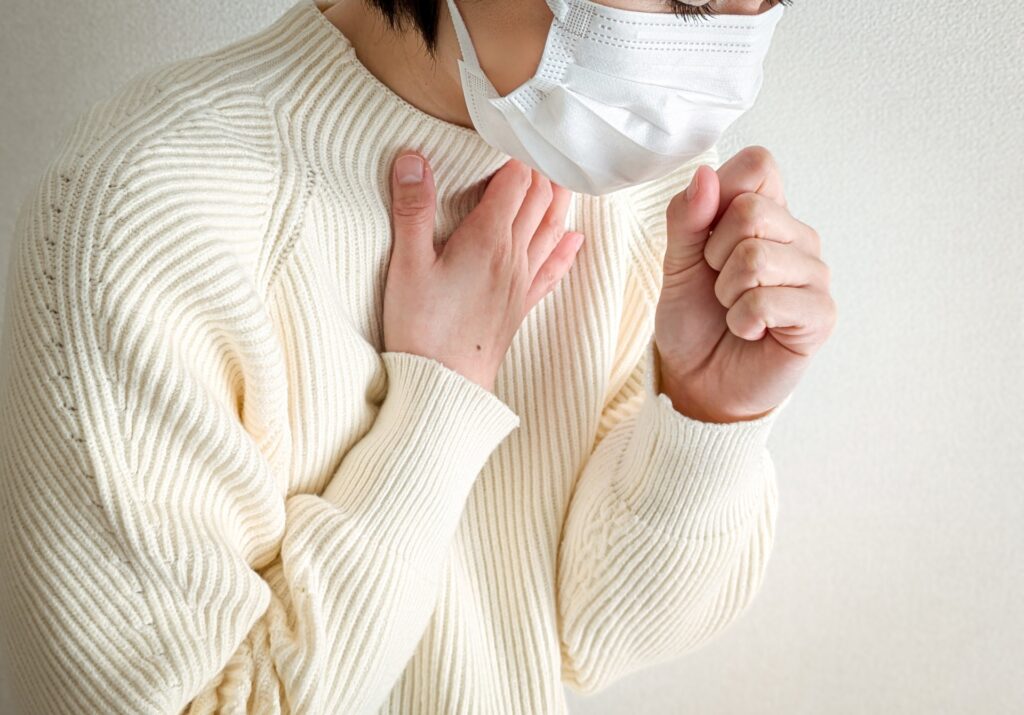
The respiratory system includes the nose, mouth, trachea, bronchi, and lungs — a series of organs that take in air and exchange oxygen and carbon dioxide. When something goes wrong with this system that supports the breathing we do every day without thinking, symptoms such as coughing, phlegm, breathlessness, and wheezing may appear.
Respiratory conditions range from acute infections like the common cold and influenza to chronic and more serious diseases such as asthma, chronic obstructive pulmonary disease (COPD), and pneumonia. Among these, asthma is characterized by the fact that it is not an infection but rather chronic inflammation of the airways — meaning it is not something that “gets better and goes away” but rather a condition that requires long-term management and control.
Approximately 3 to 6 percent of adults in Japan are estimated to have asthma (figures vary depending on the study), making it far from rare. Nevertheless, a certain number of people remain untreated, thinking “it’s just a mild cough” or “I thought I outgrew it as a child.” If left untreated or poorly controlled, ongoing chronic inflammation can gradually thicken the airway walls (a process called airway remodeling), potentially making the changes difficult to reverse.
While asthma cannot be completely cured, it is entirely possible to maintain an attack-free state (good control) with proper treatment. If you have been experiencing recurring coughs or are unsure how to use your medication, please do not hesitate to reach out.
What Is Asthma?
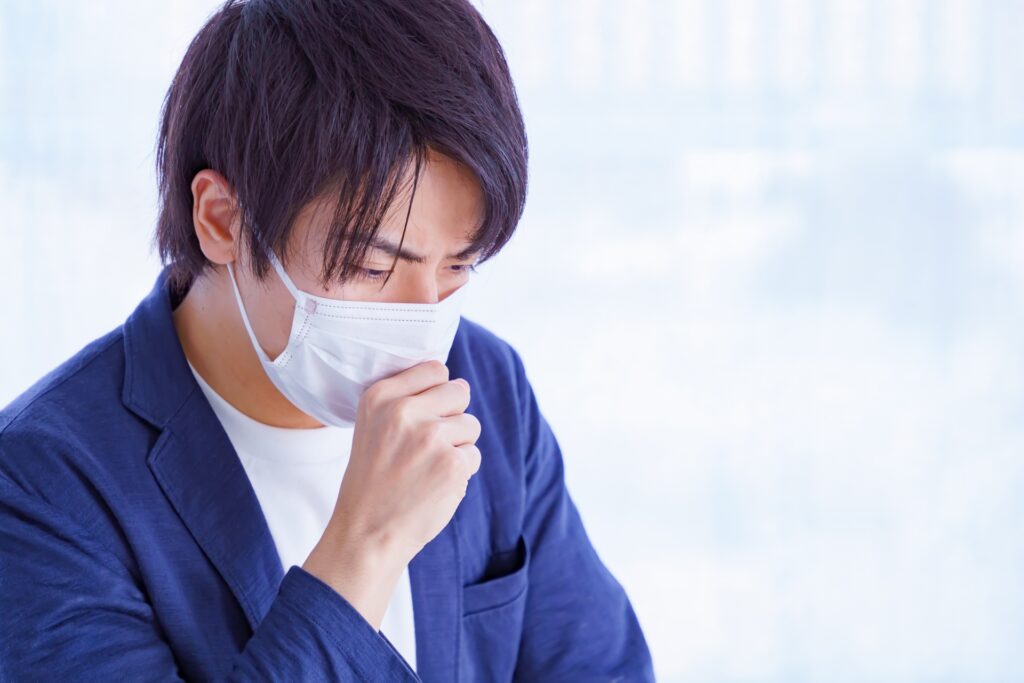
Asthma (bronchial asthma) is a condition in which the airways (bronchi) are in a state of chronic inflammation. As inflammation persists, the airway lining swells and the airways narrow, and various triggers (allergens, cold air, exercise, stress, etc.) can cause sudden episodes of breathlessness.
Chronic Airway Inflammation
In a healthy state, the airways maintain an adequate diameter, allowing air to flow smoothly in and out. In a person with asthma, however, the inner lining of the airways is chronically swollen due to inflammation, making them hypersensitive to stimuli (airway hyperresponsiveness).
Immune cells involved in allergic reactions — such as eosinophils, mast cells, and T lymphocytes — play a central role in this chronic inflammation. These cells accumulate in the airways and release inflammatory substances such as histamine and leukotrienes (chemicals that trigger inflammation), causing the airways to remain swollen and narrowed.
How Attacks Occur
When chronic inflammation is present, even normally harmless stimuli can trigger an “attack.” During an attack, three things happen simultaneously:
- Bronchospasm (bronchial constriction): The smooth muscles contract, rapidly narrowing the airways
- Mucosal swelling (edema): Inflammation causes the inner walls of the airways to thicken
- Excessive mucus production: Thick, sticky mucus blocks the airways
The combination of these three processes produces the wheezing, severe breathlessness, and coughing characteristic of an asthma attack.
Causes and Risk Factors for Asthma
Asthma tends to occur more frequently in people with an allergic predisposition (atopic constitution). When allergens such as house dust, dust mites, mold, pet dander, and pollen are repeatedly inhaled over a long period, airway inflammation can become chronic. On the other hand, there is also a “non-atopic (non-allergic) type” that develops without an allergic component, which is more commonly seen in cases of adult-onset asthma.
In adult-onset asthma, exposure to chemicals or dust in the workplace or home environment, obesity, hormonal changes in women, and stress or fatigue are also known to contribute to onset and worsening of the condition.
Characteristics and Symptoms of Asthma
Asthma symptoms are characterized by a pattern that often flares up suddenly. However, because airway inflammation persists even when there are no attacks, it is important to continue treatment even when you feel fine.
Typical Symptoms
Breathing-related symptoms
- Wheezing: A “whistling” or “rattling” sound when exhaling
- Difficulty breathing: A sensation of being unable to inhale or exhale
- Chest tightness or a feeling of pressure
Cough-related symptoms
- Sudden dry cough (especially at night and in the early morning)
- Prolonged coughing (cough-variant asthma: a form of asthma without wheezing)
- Coughing triggered by exercise, cold air, or smoke exposure
Timing and seasonal patterns
- Tends to worsen at night and in the early morning: The time when airways are most hyperresponsive due to autonomic nervous system activity
- Tends to worsen at the change of seasons: Particularly in autumn (dead dust mites, pollen, temperature fluctuations) and spring (cedar and cypress pollen)
- May also worsen during the rainy season (mold, increased humidity) and winter (dry air, cold air)
Common features of adult asthma
- A specific cause often cannot be identified through allergy testing
- Attacks may be triggered by aspirin or other pain-relieving medications (aspirin-induced asthma)
- Stress, overwork, and sleep deprivation may contribute to symptom worsening
- Symptoms tend to be more severe in people with a history of smoking
Exercise-induced asthma
- Coughing or breathlessness during or shortly after physical activity or sports
- Cold, dry air inhaled during exercise stimulates the airways
- In many cases, symptoms can be controlled with appropriate preventive medication
Treatment and Management of Asthma
Asthma treatment is based on combining “medications that relieve current attacks (rescue medications)” with “medications that suppress inflammation and help prevent attacks (long-term controller medications).” By additionally addressing environmental factors, lifestyle habits, and psychological stress, a more stable condition can be maintained.
At Keldsen Family Clinic, we manage mild-to-stable asthma. For severe asthma, acute major attacks, or cases requiring hospitalization, we coordinate with specialized hospitals for referral. Whether you want to understand the current state of your condition or need help with how to use your medication, please feel free to consult us at any stage.
1. Medication Therapy (Inhaled Corticosteroids and Bronchodilators)
The cornerstone of asthma treatment is inhaler therapy. Because inhaled medications are delivered directly to the airways, they can achieve results at lower doses than oral medications and have less impact on the rest of the body.
Long-term controller medications (used daily to suppress inflammation)
- Inhaled corticosteroids (ICS): The most important medication for controlling chronic airway inflammation. While the word “steroid” may cause concern, inhaled corticosteroids have minimal systemic absorption and are considered safe when used properly. They form the foundation of current asthma treatment. Rinsing your mouth after inhalation can help reduce localized side effects in the mouth (dry mouth, hoarseness, oral candidiasis, etc.)
- Long-acting beta-2 agonists (LABA): Bronchodilators that keep the airways open for 12 to 24 hours. They are often prescribed as a combination inhaler with an inhaled corticosteroid
- Leukotriene receptor antagonists (LTRA): Oral medications that block the action of leukotrienes (inflammatory substances in the airways). Also effective for patients with concurrent rhinitis
- Long-acting muscarinic antagonists (LAMA): Supplementary inhaled bronchodilators. Used as add-on therapy to ICS/LABA for moderate-to-severe asthma
Rescue medications (used when symptoms occur)
- Short-acting beta-2 agonists (SABA): Open the airways within 15 to 30 minutes of inhalation, rapidly relieving an attack. Should always be carried as an “emergency medication”
Treatment is adjusted by monitoring control status through peak flow meter self-monitoring (a simple device that measures how hard you can exhale) and periodic pulmonary function tests.
2. Psychosocial Support
Asthma and stress are closely related. Stress, anxiety, and tension have been suggested to affect airway hyperresponsiveness, and psychological support may play a role in managing symptoms. Additionally, worry about having another attack can lead people to avoid going out or exercising, gradually shrinking their daily lives.
Keldsen Family Clinic has both Psychosomatic Medicine and Psychiatry departments on site, allowing us to support the anxiety and stress that accompany asthma in coordination with internal medicine. We welcome patients who want to discuss not only their physical symptoms but also their emotional well-being.
Practicing breathing techniques (diaphragmatic breathing, slow breathing) may also help alleviate symptoms during mild attacks or moments of anxiety.
3. Considerations for School and Work
Accurate communication with those around you is important for managing asthma while continuing school or work.
- At school: Share information about the student’s asthma status, what to do during an attack, and how to use emergency medications with the school physician, homeroom teacher, and school nurse. Preventive inhalation may be used before activities with high physical demands such as physical education classes and field trips
- At the workplace: Activities involving exposure to chemicals, dust, or strong fragrances should be discussed with your physician. Poor ventilation or air conditioning can be a risk factor, so consulting an occupational health physician may also be helpful
- Desk work and remote work: Avoid sitting directly in the path of air conditioning drafts and use a humidifier to maintain indoor humidity
- Emergency preparedness: Provide your school or workplace with written information about whom to contact and what to do in case of an attack
Our clinic also serves as an occupational health provider and can assist with consultations regarding workplace environment adjustments.
4. Home Management (Dust Mites, Dust, and Pet Allergens)
In Japan, house dust and dust mites are the most significant asthma allergens. Dust mites thrive in warm, humid conditions, multiplying in large numbers in bedding, carpets, and stuffed animals from the rainy season through summer. In autumn, their dead bodies and droppings become airborne, easily triggering attacks.
Dust mite and dust control
- Wash bedding (futons, pillows, sheets) at least once a week and use anti-mite covers
- After sun-drying futons, vacuum them to remove dead mites
- Avoid carpets and rugs where possible; opt for hard flooring
- Vacuum at least twice a week, moving slowly with a high-suction vacuum cleaner
- Maintain indoor humidity at around 50% (use a dehumidifier or air conditioner dehumidification mode)
Pet allergen management
- If a pet allergy has been confirmed, measures such as keeping pets out of the bedroom and bathing them regularly may be effective
- You do not necessarily need to rehome your pet immediately, but if symptoms continue to worsen, consult your physician
Other indoor environment tips
- Use ventilation fans and air purifiers (with HEPA filters)
- Avoid cigarette smoke, incense, and strong aromatic fragrances, as these can irritate the airways
- Volatile organic compounds (VOCs) from new construction or recent renovations may also act as irritants
5. General Lifestyle Self-Care (Smoking Cessation, Exercise, and Sleep)
Smoking cessation Smoking directly worsens airway inflammation and reduces the effectiveness of medication, making it one of the greatest risk factors. Secondhand smoke is equally harmful. For those who smoke, quitting is one of the top priorities in asthma management. We also offer smoking cessation consultations.
Exercise Some people avoid physical activity because they have experienced an attack during exercise. However, moderate exercise improves lung function, stamina, and stress resilience, all of which benefit long-term asthma management. Inhaling a short-acting beta-2 agonist before exercise can prevent exercise-induced attacks in many cases. Work with your physician to find the right amount of activity for you. Swimming is considered a relatively suitable exercise for asthma patients because it avoids the inhalation of cold, dry air.
Sleep Because asthma tends to worsen at night and in the early morning, quality sleep is especially important. Sleep deprivation can disrupt immune function and increase stress hormones, heightening airway hyperresponsiveness. Before bed, clean your bedding, ventilate the room, and maintain appropriate temperature and humidity levels. If you have trouble falling asleep, wake frequently during the night, or snore loudly, other conditions such as sleep apnea may be involved, so please consult with us.
Diet and weight management Obesity is known to worsen airway inflammation and make asthma harder to control. A balanced diet and maintaining an appropriate body weight are directly connected to effective asthma management.
Asthma is a condition where, with proper ongoing treatment, “attack-free days” are an achievable goal. If you have a lingering cough, have been told you have asthma in the past, or want to review how you use your medications — please feel free to contact Keldsen Family Clinic. We are a 1-minute walk from ‘Oizumi Yubinkyoku’ bus stop, accessible by Seibu Bus from Oizumi-Gakuen Station, open on weekends and holidays, and offer telemedicine.